

K Grieve • January 9, 2026
Inner City Hope
Inside One Inner City School and the People Who Refused to Look Away
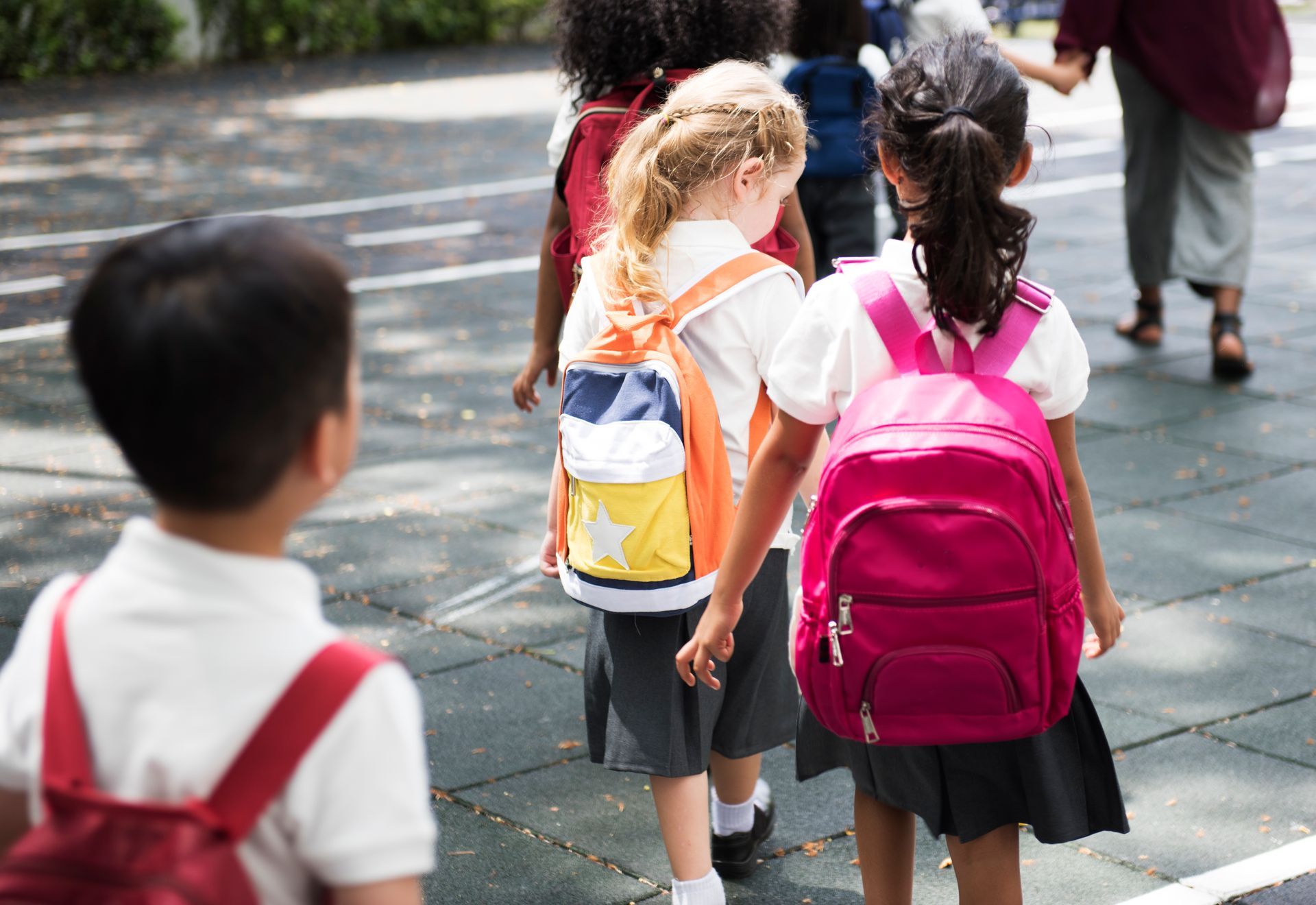
Every morning, there are children who walk to an inner city elementary school in Edmonton Alberta carrying backpacks far heavier than books. Some of the weight is invisible: fear, hunger, worry. Burdens that no child should be forced to endure.
The daily journey to school is not the “stuff” of fairytales. These young students must step carefully over sleeping bodies-the smell of alcohol and human waste filling the air. They pass by unhoused men and women bundled up in rotting blankets as they huddle on concrete doorways. People shooting up drugs is a regular scene. Some of these people the kids know-some are even family members. Shocking? unthinkable? Not for many of these children. It is simply the reality of their childhood.
Inside the school walls, conversations are a chorus of languages and a mosaic of accents and cultures. Many have emigrated to Canada and English isn’t their first language. Some are Indigenous children. Some are housed in shelters or even live on their own. Most are trying to learn how to be heard, struggling with how to tell teachers they have a tummy ache or to confess they are afraid. Yet they are all determined to belong, to be noticed, to be loved and to have hope.
Far too many arrive hungry, their empty stomachs growling. Food insecurity is a reality. No breakfast nor lunch packed in cute little personalized lunchboxes. Kim, a dedicated teacher at the school told me there is a breakfast program the school calls “morning meal” that is available to all kids. It may be simple but it matters greatly-yogurt, bananas and sandwiches are given to any child who needs it. There is no formal lunch program, so when extra food is available, it is saved for students without lunch. Slim pickings by most standards.
During the school day, these children carry a heavy weight of uncertainty; they are not sure how to make sense of addition and subtraction, not sure what the teacher is saying, not sure where their next meal is coming from, not if the person greeting them at home is friend or foe. The uncertainty fuels their anxiety. The uncertainty robs them of joy. The uncertainty intensifies their fear.
Beyond this there are stories even more disturbing. Abuse. Neglect. Physical violence. These realities have taught some children to be on their guard and to always be on the defensive. These children are not “difficult.” They are hurt.
A number of the children arrive each day living in what we adults call “fight or flight”. Their antennae are on high alert. Teachers gently tell them how to breathe, how to name feelings and how to calm their bodies.
As if these challenges weren’t already overwhelming, the school faces a constant battle with head lice.
Despite these struggles, teachers and school administrators show up, day after day, ready to provide stability and predictability. They notice who hasn’t eaten or who is wearing the same clothes day after day. These teachers wear many hats. They are educators, counsellors and protectors.
Most classrooms in this school follow a “trauma informed approach”: soft lighting, minimal clutter, consistent routines and predictable schedules. For children whose lives are filled with trepidation, school becomes their dependable constant. The goal isn’t just academics-it’s helping children feel safe and strong enough to begin to heal.
Enter my friend Deb!
Deb, who is affectionately called Miss Deb, volunteers at this challenging school. Two to three times a week she shows up at the school and does what committed school volunteers do. She gives her time, her heart and her presence to children who need all three. Kim says this about Deb. “I can recall a moment this fall where a student was upset. I was trying to distract him and get him thinking positively so he would calm down. I asked him to tell me things that made him happy. He listed three things. One of them was Miss Deb.” That says it all.
But for Deb the stories she hears about the kids have keep her up at night, anxious and worrying. Could there be some tangible way to help? Deb knew the principal and staff had been working for a long time to secure the funding needed to build a new playground for the school. They managed to raise some of the money but were short by $35,000 to make the playground a reality. And for that reason, Deb sent out a heartfelt plea to community members to help fund the long needed play ground.
This could not be some ordinary playground. Because of the surrounding environment, it needed to be “ special”: fully enclosed and carefully designed to protect the kids from hazards, like discarded needles from drug use. This playground had to be designed to prevent it from being used as sleeping spaces for the homeless or individuals affected by addiction. What should be a simple place to play must also be a protected space where children can feel safe and simply just be children.
And then something special happened. Deb’s plea did not fall on deaf ears. Within minutes of Deb’s email being sent, the local community stepped up. The response was overwhelming. One donor, a well known Edmonton philanthropist, immediately responded and pledged the full $35,000! Others stepped up as well. And most recently a charitable foundation matched the $35,000 which will fund other critical school priorities. It was an astonishing level of generosity and a reminder of how much people care when they are asked.
As a former teacher and one who has spent years in public service in Edmonton, I have witnessed first hand how these serious struggles intersect - each intensifying emotional and physical strain. Poverty, homelessness, addiction and family violence are profoundly intensified by our already strained and outdated support systems.
Certainly, this local community response was remarkable. It’s proof of the power of a combination of compassion and generosity. This story exemplifies that help can be available when need is shared; it underscores the positive and critical impact of volunteerism. “Sometimes miracles are just good people with kind hearts”
But it also leaves us with a bigger and more disturbing question: What can we do as a society to address the deep challenges that at-risk children face? How can we break the cycle that has trapped them? How can we help them envision a brighter future?
A playground is a powerful beginning, but it cannot carry the weight.
Kathy's Blog
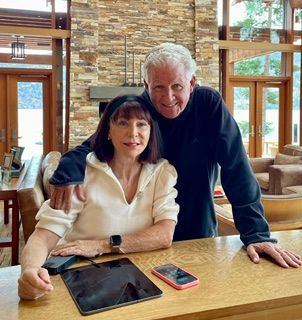
Good Friends, Great Stories Friendship isn’t always about who you have known the longest. Friendship is about the memories we’ve made, the laughter we shared and the the experiences that have woven our lives together. Friendship is about favourite traditional experiences, shared history and laughter that never fades. Friendship is about sharing margaritas at lunch, downing junk food, not counting calories and knowing that at least one of you will never make it to dinner. Friendship is about stories that get better as they are retold. My husband Ross and I have enjoyed incredible friendships throughout the years. Each one has brought its own special kind of companionship and fond memories. The following stories offer a glimpse into a few of the lasting connections that have shaped our lives. Some friendships arrive early when we really can’t appreciate their worth. I was ten years old, newly arrived from Victoria to Winnipeg when such a friendship began on a concrete playground at Frontenac School. It was early September and the prairie elm trees were beginning to show shades of burnt orange and golden yellow as I made my way to my new school. I could see a flock of Canada geese winging their way South, as far as Mexico I had heard. Dressed in turquoise peddle pushers, topped with a white tee and flowered cardigan I carried my metal “ponytail” embossed lunch kit tightly in my hand feeling both anxious and hopeful. I arrived in time to find teachers standing along the edge of the playground calling out student names and classroom numbers. I lined up behind Mrs. King who was teaching one of the two grade five classes. I followed her in line with about twenty-five rambunctious boys and girls as we made our way to the second floor to our assigned classroom. Cautiously, I headed to one of the oak desks arranged in neat rows atop the dark green linoleum floor. It seemed like a nano second later when the bell rang announcing recess and within minutes the classroom emptied. I cautiously entered the noisy playground and looked around, not knowing a single soul. The schoolyard was filled with laughing girls happily skipping double Dutch on the cracked concrete. Screaming boys were energetically playing soccer on the coarse grass and others took turns powerfully swatting at the hard tetherball. I guess it was a typical play area but to me it looked like unfamiliar territory where everyone knew the rules but me. Enter what today would be known as a “geeky” looking girl: Davette Kent. She was gawky and wore knee highs on her gangly legs. She peered at me through dark, heavy rimmed glasses. Her mousey brown hair was limp, with bangs cut straight across her high forehead. A few pimples were poking through her pale skin. Like me, she was standing alone, gazing around. She mirrored my anxiousness. Both Davette and I were in need of a fast friend that September day, and that is exactly what we found in one another. We tossed each other a lifeline, and neither of us let go. When the bell rang, we lined up holding hands and kept that tradition for the next two years when we separated and went to different schools. … My husband Ross began a friendship with a young fellow named Bob. They met in grade eight in Winnipeg Manitoba. It was a friendship that carried on through high school, university and beyond. In high school they made what they considered a particularly strategic decision: they joined the choir, not because either had dreams of musical greatness, but because they had discovered that the choir was an excellent place to meet girls. It may not have launched a singing career, but it reinforced a friendship that would last a lifetime. Years later, it was early spring in Toronto on a late Wednesday afternoon in 1977 when my husband, Ross got “the call”. The streets were filled with the grey slush of the melting snow from a colder than usual T.O winter when he made his way to the office that day. Working for a large family owned Canadian construction company since 1969, he was accustomed to surprises and was deft at handling them. This call was different and very much out of the ordinary. It was a call that changed the course of his life and mine. That afternoon one of the company executives from head office in Edmonton reached out to Ross and told him to make his way to the Toronto airport at midnight. He was told to pick up a package at Canadian Airlines. “What’s it about?”, Ross asked. “Just be there!” the executive replied, and “make your way to Edmonton on Saturday for a morning meeting at the Van Winkle Hotel.” It all seemed strange and almost clandestine! Navigating the dimly lit streets, Ross arrived home from the airport and opened the “mysterious” package. He learned that the Poole family was selling the company they had founded in 1906. The company’s visionary president since 1947 was leading a management buyout and his plan was to invite twenty four of his managers of the day to buy the company. Each invitee was offered a small interest with the president taking the biggest proportion. Ross was the youngest of the group and had just recently been given the manager designation. He felt honored and lucky to be given this extraordinary invitation. It certainly turned out be be an opportunity of a lifetime. Ross did get to the Saturday morning meeting and agreed to accept his offering which was a total investment of $8000. Although he agreed to invest he didn’t have the $8000 readily available but figured he could find a way to make it happen. That Saturday afternoon on his return to Toronto he stopped in his hometown of Winnipeg to see his family but first met his best friend Bob at the Norwood Hotel that Bob and his family owned. Over an ice-cold beer, Ross told Bob the story about the surprising sale. He told Bob he would like to invest but wondered how on earth he was going to come up with the money. Bob said “Ross you have to do it. Wait here I will be right back .” Bob returned in ten minutes with a brown paper bag and handed it to Ross. Inside was $8000 cash that Bob pulled from his vault. This generous gesture was unconditional and given without hesitation. A testament to a friendship built to last. Many years later, the friendship went the other direction and Ross returned the favor by investing in a project that Bob was spear heading. Through the decades, Ross and Bob’s friendship continued to build on loyalty, shared history and stories worth retelling. More than six decades later, their friendship lives on. It’s a friendship shaped by growing up together, knowing each other stories, sharing life‘s joys and challenges, and enjoying professional success. Here is Ross and I (left) with Bob and his wife Dianne (right)
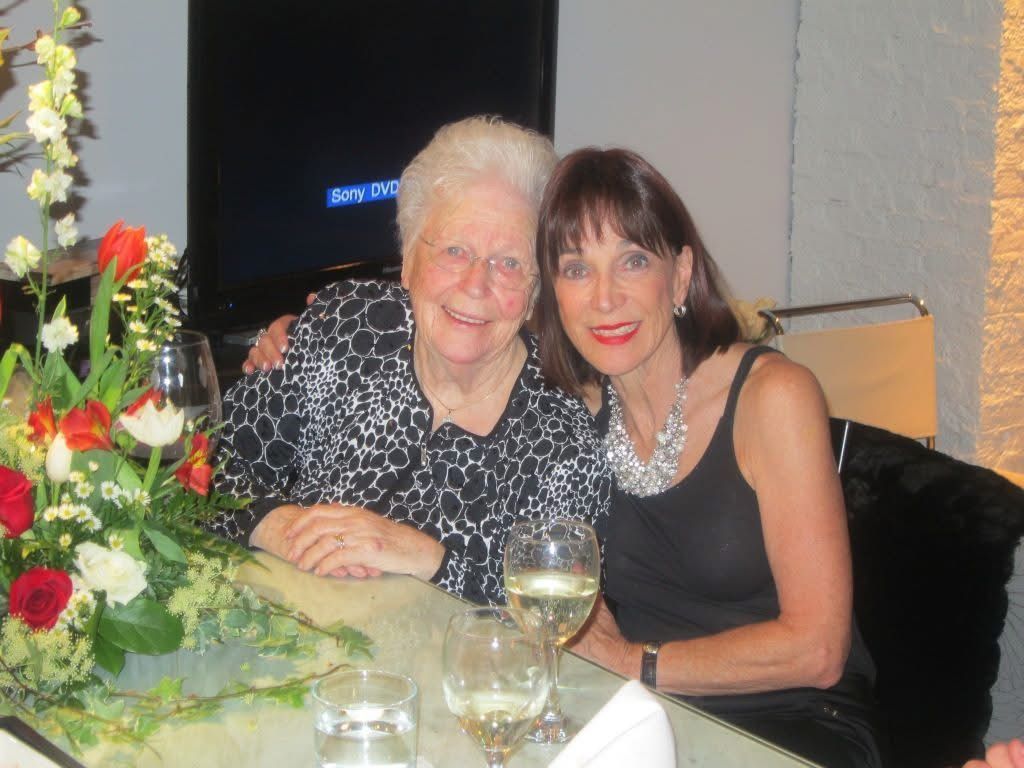
“Helen Mirren, who turned 80 in 2025, rejects the term “aging gracefully,” preferring to describe her approach as "aging with fun, commitment, and unapologetic realism". She advocates for embracing the natural process of getting older as a "beautiful thing" rather than fighting it, encouraging others to live in the moment and accept physical changes.” Aging is not for the faint of heart! It creeps up on you before you actually know it’s happening. It demands courage, boldness, wisdom, resilience, and realism. Add to that, growing older centers on the stories you carry and the memories you hold. For me, many of those lessons were learned from stories about my mother’s life, her choices, and the way she met hardship and joy. How Mom lived her life gave me my first understanding of what it means to live and to age with determination. My mother Marjorie lived until 95. Mom’s married life was pretty much emblematic of her generation. A devout Catholic, she learned the hard way that the ‘Rhythm Method’ (the practice of choosing specific days for intimacy to avoid pregnancy) of birth control was not in the least dependable. Think five kids with the last, our youngest brother Doug, born when my mom was 40. She smoked Crave M cigarettes. Back then, you could send a kid to the local drugstore with a quarter and a note to the pharmacist to get your cigarettes. Unheard of in today’s world. Almost weekly, my mom made homemade bread which filled the house with a yeasty and comforting smell. And her doughnuts were the talk of the neighborhood. Deep-fried and laid out on brown paper to cool, she dipped them in sugar, and we ate them while they were still warm. It was one of Mom’s ways of showing us love: one delicious donut at a time! My mom’s early life was less typical. Born in 1921 in Saskatchewan, she was a child of the Dust Bowl era. The middle child of six kids, she had a pleasing personality and was known as a hard worker. Perhaps that explains why, when she was just nine years old, she was sent to her Aunt Kate, where she helped in the Red and White store that Kate managed. Mom cried her eyes out for a year after she arrived because she missed home. Seven years later, she cried her eyes out when she was sent back home. My mom met those challenging years away from home with realism that helped to shape her resolve and solidified her perseverance. Her way of handling hardships and setbacks helped shape my understanding of how to approach life’s highs and lows. Looking back, it’s hard not to appreciate Mom’s handling of her early life challenges. At a time when most children are living with their parents and siblings, she learned to adapt, work, and endure separation. The tears marked her sadness, but the fact that she endured it speaks to her strength and courage. As she aged, life asked more of her, not less. She met aging the only way she knew: steadily and cheerfully. Aging didn’t soften her resolve; it strengthened it. My mother was lucky in many important ways. She was surrounded by her family and wonderful caregivers that went above and beyond the call of duty. In the last chapter of her life, she lived with my sister Gail and her partner Andrew. Helped by my other siblings, she was given something money can’t buy: a life that felt like hers. One special caregiver, Helen, understood that caring for another is more than schedules and medications. She would play one of Mom’s favourite songs, and the two would dance, smiling and giggling as they moved to the rhythm of the song. And God only knows why Mom had a parrot for a pet; a parrot that hated everyone but Mom. That bird squawked and tried to attack anyone who entered: except my mom. Strange as it may seem, that annoying parrot triggered my mom’s lifelong ability to tolerate difficult personalities. It seems to me that Mom’s life may have slowed, but it remained rich. Hearing my mom’s stories showed me that tears do not mean fragility. Tears mark courage, determination, and boldness. Now, as I grow older, I begin to see these same qualities as the core to aging. Aging hasn’t softened me: it has required me to stand more firmly, speak more directly, and, like Mom, to keep moving forward with resolve. “Do not go gentle into the night. Rage, rage against the dying of the light.” (Dylan Thomas) For most of my life, I believe I have been considered outspoken. But with aging, I have honed that characteristic to a fine point. Not long ago, I was part of a conversation about “the state of the world.” All of us were well into our seventies. We lamented days gone by and talked about how chaotic and fractured everything seems and how our reality is disturbing and disconcerting. The group represented different points of view, and the talk moved rather awkwardly but cautiously into politics. Definitive statements were made as if all would agree. Boldness took over me! I spoke up, standing my ground without apology. I felt something in me shift. It would have been easy to try to smooth things over, but instead, I chose to be bold and stand my ground. I am older now and believe aging is not about retreating from the world. It’s about resolve and courage in the face of opposition. Aging, of course, isn’t just philosophical. It shows up in physical ways. Knees and hips need replacing, bodies that don’t bounce back the way they used to, medications and vitamins galore to swallow. And tragically for some, illnesses occur that can be life-threatening. There is no bravery in pretending otherwise. But boldness and courage still have a place here. They help in deciding to face head-on what lies ahead, to ask the right questions, and to endure treatment and recovery. Aging asks us to be realistic, accepting the challenges aging can present. Aging isn’t always about changes to ones body but the evolving nature of our character. Inspired by my mother, I now feel that I am entering a period of my life where I am more determined to uphold my principles and stand up for the things that I believe. Time won’t always be on your side. It’s the simple truth, and it’s no surprise. But now and then, like my mom, there is still time for a dance!! “The years teach much which the days never know.” (Ralph Waldo Emerson)