
sassykg • January 30, 2021

I was twelve when I first remember “taking on the system”. It was a wintery evening like most other January nights in Winnipeg. Temperatures were well below what any human being should be expected to withstand. A sea of snow covered our yard and my two younger brothers were arguing over whose turn it was to shovel our driveway, punctuating their points with a few not so well placed jabs to each other’s shoulders. Rough housing is what Dad called it, saying it with a certain amount of pride. I was smug in the confidence that the shovelling debate excluded me because at the time in my family, my gender kept me out of contention for such a chore. I believe I had just finished doing the dishes (mismatched melmac plates that came “for free” inside boxes of laundry detergent). I was layering myself into bulky ski pants, thick sweaters, a pair of mismatched mittens and a white “fun fur” hat I bought on sale downtown at The Bay. I was on my way to our local branch of the library, a six block walk.

I was heading to pick up something to read to fill the restless moments when my father took to hogging the television as he watched some of his favourite programs like the Canadian variety show: The Juliette Show. We had only one TV which was pretty much par for the course at the time and it stood at the head of the living like some revered idol. So all in all, it was a seemingly routine night in a reasonably conventional family. Not the kind of night you could have predicted would initiate me into the world of social action.

Reading was a fundamental part of my childhood and teenaged life. I cut my teeth on “Ann of Green Gables” and “Gone With the Wind”. The library was the main source for my reading material. I enjoyed my trips there because the building was usually filled with kids my age, ostensibly there to look up stuff in the Junior Britannica in order to complete homework assignments. This January night was no different and I remember being in a happy mood despite the nasty weather.

I spent about a half hour perusing the young reader section of the library, a category reserved for readers 10-13 years. Not finding anything to my liking, I ventured into the teenage section and several books there piqued my attention. I settled on one called “Hawaii” by James Michner. The jacket summary promised me an opportunity to experience the life of Malama a woman who survived hardship, heartbreak and other tribulations on a beautiful Pacific island. I plucked the book from the shelf and headed toward the circulation desk.

It was there I encountered Mrs. Blackmore, the assistant librarian, a woman short in stature and long on procedures and regulations. She accepted the book from me with something approximating disinterest and moved to withdraw the card that was tucked inside the paper pocket glued to the inside page. Here is where the trouble began but not where it ended!

Unbeknownst to me, the book was classified OTR (Older Teenage Reader). One look at my outfit alone clued Mrs. Blackmore into the fact that I was a far cry from the 17-18 year old that I would have to be to “legally” withdraw the book. When she asked me my age (probably the required procedure outlined in the librarian assistant’s handbook) it crossed my mind that it could be a question crucial to my obtaining the novel. I wanted to at least qualify for the early teenage section so I raised my head and shoulders in a puffed-up kind of way and said in a not so loud voice “13 last November!” Whether she believed me or not was irrelevant because what I needed to be was at least 17. She denied me the book.

Dejected, I headed home in the dark. As I walked up the newly cleared driveway I noticed a 1959 Ford Fairlane that was not so expertly parked behind my dad’s 1958 two-tone blue model. This meant that either my Uncle John or his wife, Aunt Bea, or both were visiting. They were the parents of my eight first cousins who lived about a mile away.

I came through the side entrance, the one we called the back door to find my mother and aunt ensconced at our brown arborite kitchen table. It didn’t take me a minute to blurt out my angry reaction to the unjust library incident. I doubt that I expected much of a helpful response from the two women, after all, what interest would they have in a 12 year old’s grievance?But to my amazement they seemed more than concerned. They shared my exasperation and sense of unfairness.

I joined them at the table and helped myself to the homemade biscuits that sat in a small wicker basket. My mom wanted to phone the librarian on my behalf and explain that I was a mostly sensible grade 8 student. After all, she and my dad were scrimping and saving to send me to an all girls’ Catholic school so I would be the product of a superior education. To my mom’s way of thinking that gave me a definite edge. She would tell the library powers that be that I had her permission to read the book and that should be the end of it. The idea appealed to me. I saw it as expedient and it required no effort on my part.

Auntie Bea had another idea. Why didn’t I write to city council about the discrimination? She pointed out that the library’s policy not only discriminated against young readers but was also a form of censorship which she personally found reprehensible. I thought “reprehensible” was a nifty word and stored it away for future use. Aunt Bea felt the library policy would never change if the people in charge were not made aware of the problem. My mother suggested that I might first alert the “head guy” of the library but Aunt Bea was convinced that I should bypass the bureaucracy (another great word) and work with the politicians. She explained there was a greater likelihood my concern would be addressed if I sought the help of elected officials because they mostly liked to help their constituents. Besides, my Uncle John was an alderman and would ensure that my letter received some attention.

To say that I got caught up in the fever of the moment is to say that William F. Buckley was somewhat conservative. I composed what to me, and as it turns out to the head librarian, was a scathing letter denouncing the library policy and it’s discrimination against younger readers. My uncle reported that the letter was read aloud at the council meeting and it was tabled. Unsure of just what tabled meant I nonetheless considered my protest a success. For the next three days I basked in the glory of triumph.

On the fourth day I was still high on the sweet taste of victory. I made my way back to the library fully convinced that I could withdraw the exciting novel. I gingerly entered the teenage section and found the publication. Feeling powerful and self assured I marched to the circulation desk and presented the book and my library card. I recognized the head librarian, Mrs Cantor, and offered her an amiable smile. What I got in return was a scowl and a very stiff, very loud and very public reprimand,

I guess Mrs. Cantor missed the positive spirit in which my complaint was offered. Instead of seeing my letter as constructive criticism of the system, she took my critique extremely personally. She was more than prepared to defend not only her position but also make it unlikely I would ever want to step foot into “her” library any time soon. Obviously my letter had more repercussions than I could have anticipated. The head librarian’s thunderous reproach left me shaking in my mukluks and reassessing the virtues of single handed political protest.

All these years later I believe my adolescent foray into challenging injustice set the stage for my future concern for inequity. It is not lost on me that of the options my mother and aunt offered me, I chose what some would call the rebellious route. Recognition that power differentials exist and that they support injustice has remained with me to this day. Those who know me best will acknowledge a feisty side to me and a penchant for arguing for the disenfranchised. And I am comfortable with that.

A few days ago I was walking with a friend on an unusually cold desert morning. We rarely run out of good conversation and that day was no different. We talked about having strong positions on issues and differing world views. At some point my walking partner shared a saying that her husband often uses. It has resonance for me and puts some levity to my inclination to having unbending points of view.

“I am often wrong but never in doubt!”

is loading comments...

Kathy's Blog

By K Grieve February 20, 2026
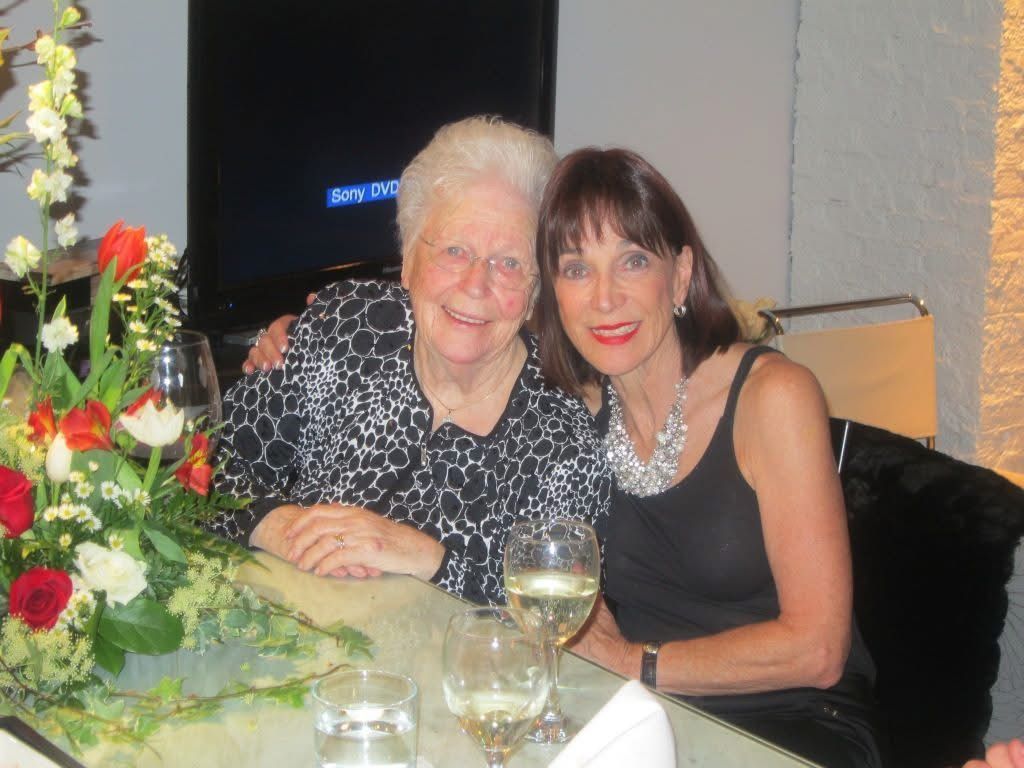
“Helen Mirren, who turned 80 in 2025, rejects the term “aging gracefully,” preferring to describe her approach as "aging with fun, commitment, and unapologetic realism". She advocates for embracing the natural process of getting older as a "beautiful thing" rather than fighting it, encouraging others to live in the moment and accept physical changes.” Aging is not for the faint of heart! It creeps up on you before you actually know it’s happening. It demands courage, boldness, wisdom, resilience, and realism. Add to that, growing older centers on the stories you carry and the memories you hold. For me, many of those lessons were learned from stories about my mother’s life, her choices, and the way she met hardship and joy. How Mom lived her life gave me my first understanding of what it means to live and to age with determination. My mother Marjorie lived until 95. Mom’s married life was pretty much emblematic of her generation. A devout Catholic, she learned the hard way that the ‘Rhythm Method’ (the practice of choosing specific days for intimacy to avoid pregnancy) of birth control was not in the least dependable. Think five kids with the last, our youngest brother Doug, born when my mom was 40. She smoked Crave M cigarettes. Back then, you could send a kid to the local drugstore with a quarter and a note to the pharmacist to get your cigarettes. Unheard of in today’s world. Almost weekly, my mom made homemade bread which filled the house with a yeasty and comforting smell. And her doughnuts were the talk of the neighborhood. Deep-fried and laid out on brown paper to cool, she dipped them in sugar, and we ate them while they were still warm. It was one of Mom’s ways of showing us love: one delicious donut at a time! My mom’s early life was less typical. Born in 1921 in Saskatchewan, she was a child of the Dust Bowl era. The middle child of six kids, she had a pleasing personality and was known as a hard worker. Perhaps that explains why, when she was just nine years old, she was sent to her Aunt Kate, where she helped in the Red and White store that Kate managed. Mom cried her eyes out for a year after she arrived because she missed home. Seven years later, she cried her eyes out when she was sent back home. My mom met those challenging years away from home with realism that helped to shape her resolve and solidified her perseverance. Her way of handling hardships and setbacks helped shape my understanding of how to approach life’s highs and lows. Looking back, it’s hard not to appreciate Mom’s handling of her early life challenges. At a time when most children are living with their parents and siblings, she learned to adapt, work, and endure separation. The tears marked her sadness, but the fact that she endured it speaks to her strength and courage. As she aged, life asked more of her, not less. She met aging the only way she knew: steadily and cheerfully. Aging didn’t soften her resolve; it strengthened it. My mother was lucky in many important ways. She was surrounded by her family and wonderful caregivers that went above and beyond the call of duty. In the last chapter of her life, she lived with my sister Gail and her partner Andrew. Helped by my other siblings, she was given something money can’t buy: a life that felt like hers. One special caregiver, Helen, understood that caring for another is more than schedules and medications. She would play one of Mom’s favourite songs, and the two would dance, smiling and giggling as they moved to the rhythm of the song. And God only knows why Mom had a parrot for a pet; a parrot that hated everyone but Mom. That bird squawked and tried to attack anyone who entered: except my mom. Strange as it may seem, that annoying parrot triggered my mom’s lifelong ability to tolerate difficult personalities. It seems to me that Mom’s life may have slowed, but it remained rich. Hearing my mom’s stories showed me that tears do not mean fragility. Tears mark courage, determination, and boldness. Now, as I grow older, I begin to see these same qualities as the core to aging. Aging hasn’t softened me: it has required me to stand more firmly, speak more directly, and, like Mom, to keep moving forward with resolve. “Do not go gentle into the night. Rage, rage against the dying of the light.” (Dylan Thomas) For most of my life, I believe I have been considered outspoken. But with aging, I have honed that characteristic to a fine point. Not long ago, I was part of a conversation about “the state of the world.” All of us were well into our seventies. We lamented days gone by and talked about how chaotic and fractured everything seems and how our reality is disturbing and disconcerting. The group represented different points of view, and the talk moved rather awkwardly but cautiously into politics. Definitive statements were made as if all would agree. Boldness took over me! I spoke up, standing my ground without apology. I felt something in me shift. It would have been easy to try to smooth things over, but instead, I chose to be bold and stand my ground. I am older now and believe aging is not about retreating from the world. It’s about resolve and courage in the face of opposition. Aging, of course, isn’t just philosophical. It shows up in physical ways. Knees and hips need replacing, bodies that don’t bounce back the way they used to, medications and vitamins galore to swallow. And tragically for some, illnesses occur that can be life-threatening. There is no bravery in pretending otherwise. But boldness and courage still have a place here. They help in deciding to face head-on what lies ahead, to ask the right questions, and to endure treatment and recovery. Aging asks us to be realistic, accepting the challenges aging can present. Aging isn’t always about changes to ones body but the evolving nature of our character. Inspired by my mother, I now feel that I am entering a period of my life where I am more determined to uphold my principles and stand up for the things that I believe. Time won’t always be on your side. It’s the simple truth, and it’s no surprise. But now and then, like my mom, there is still time for a dance!! “The years teach much which the days never know.” (Ralph Waldo Emerson)
By K Grieve January 9, 2026
Inside One Inner City School and the People Who Refused to Look Away Every morning, there are children who walk to an inner city elementary school in Edmonton Alberta carrying backpacks far heavier than books. Some of the weight is invisible: fear, hunger, worry. Burdens that no child should be forced to endure. The daily journey to school is not the “stuff” of fairytales. These young students must step carefully over sleeping bodies-the smell of alcohol and human waste filling the air. They pass by unhoused men and women bundled up in rotting blankets as they huddle on concrete doorways. People shooting up drugs is a regular scene. Some of these people the kids know-some are even family members. Shocking? unthinkable? Not for many of these children. It is simply the reality of their childhood. Inside the school walls, conversations are a chorus of languages and a mosaic of accents and cultures. Many have emigrated to Canada and English isn’t their first language. Some are Indigenous children. Some are housed in shelters or even live on their own. Most are trying to learn how to be heard, struggling with how to tell teachers they have a tummy ache or to confess they are afraid. Yet they are all determined to belong, to be noticed, to be loved and to have hope. Far too many arrive hungry, their empty stomachs growling. Food insecurity is a reality. No breakfast nor lunch packed in cute little personalized lunchboxes. Kim, a dedicated teacher at the school told me there is a breakfast program the school calls “morning meal” that is available to all kids. It may be simple but it matters greatly-yogurt, bananas and sandwiches are given to any child who needs it. There is no formal lunch program, so when extra food is available, it is saved for students without lunch. Slim pickings by most standards. During the school day, these children carry a heavy weight of uncertainty; they are not sure how to make sense of addition and subtraction, not sure what the teacher is saying, not sure where their next meal is coming from, not if the person greeting them at home is friend or foe. The uncertainty fuels their anxiety. The uncertainty robs them of joy. The uncertainty intensifies their fear. Beyond this there are stories even more disturbing. Abuse. Neglect. Physical violence. These realities have taught some children to be on their guard and to always be on the defensive. These children are not “difficult.” They are hurt. A number of the children arrive each day living in what we adults call “fight or flight”. Their antennae are on high alert. Teachers gently tell them how to breathe, how to name feelings and how to calm their bodies. As if these challenges weren’t already overwhelming, the school faces a constant battle with head lice. Despite these struggles, teachers and school administrators show up, day after day, ready to provide stability and predictability. They notice who hasn’t eaten or who is wearing the same clothes day after day. These teachers wear many hats. They are educators, counsellors and protectors. Most classrooms in this school follow a “trauma informed approach”: soft lighting, minimal clutter, consistent routines and predictable schedules. For children whose lives are filled with trepidation, school becomes their dependable constant. The goal isn’t just academics-it’s helping children feel safe and strong enough to begin to heal. Enter my friend Deb! Deb, who is affectionately called Miss Deb, volunteers at this challenging school. Two to three times a week she shows up at the school and does what committed school volunteers do. She gives her time, her heart and her presence to children who need all three. Kim says this about Deb. “I can recall a moment this fall where a student was upset. I was trying to distract him and get him thinking positively so he would calm down. I asked him to tell me things that made him happy. He listed three things. One of them was Miss Deb.” That says it all. But for Deb the stories she hears about the kids have keep her up at night, anxious and worrying. Could there be some tangible way to help? Deb knew the principal and staff had been working for a long time to secure the funding needed to build a new playground for the school. They managed to raise some of the money but were short by $35,000 to make the playground a reality. And for that reason, Deb sent out a heartfelt plea to community members to help fund the long needed play ground. This could not be some ordinary playground. Because of the surrounding environment, it needed to be “ special”: fully enclosed and carefully designed to protect the kids from hazards, like discarded needles from drug use. This playground had to be designed to prevent it from being used as sleeping spaces for the homeless or individuals affected by addiction. What should be a simple place to play must also be a protected space where children can feel safe and simply just be children. And then something special happened. Deb’s plea did not fall on deaf ears. Within minutes of Deb’s email being sent, the local community stepped up. The response was overwhelming. One donor, a well known Edmonton philanthropist, immediately responded and pledged the full $35,000! Others stepped up as well. And most recently a charitable foundation matched the $35,000 which will fund other critical school priorities. It was an astonishing level of generosity and a reminder of how much people care when they are asked. As a former teacher and one who has spent years in public service in Edmonton, I have witnessed first hand how these serious struggles intersect - each intensifying emotional and physical strain. Poverty, homelessness, addiction and family violence are profoundly intensified by our already strained and outdated support systems. Certainly, this local community response was remarkable. It’s proof of the power of a combination of compassion and generosity. This story exemplifies that help can be available when need is shared; it underscores the positive and critical impact of volunteerism. “Sometimes miracles are just good people with kind hearts” But it also leaves us with a bigger and more disturbing question: What can we do as a society to address the deep challenges that at-risk children face? How can we break the cycle that has trapped them? How can we help them envision a brighter future? A playground is a powerful beginning, but it cannot carry the weight.